
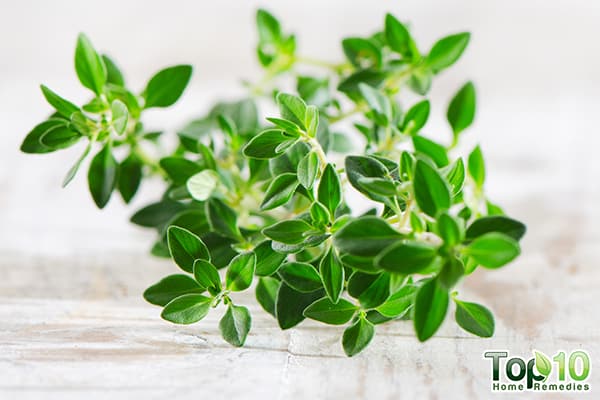
Thyme, an herb from the mint family with dietary, medicinal, and ornamental uses, is packed with health-promoting compounds, vitamins, antioxidants, and other nutrients. It not only perks up your cooking but also helps your body get rid of harmful organisms and supports your physical and mental health.
The nutrients present in this wonderful herb have both disease-preventing and health-promoting properties.
Contents
Nutritional Value of Thyme
Thymol is one of the most important volatile oils found in thyme that offers antiseptic and antifungal properties.[1] Other volatile oils in thyme include carvacrol, geraniol and borneol.
Being rich in flavonoid phenolic compounds like zeaxanthin, apigenin, lutein, luteolin and thymosin, thyme also works as a natural antioxidant. In fact, fresh thyme contains more antioxidant compounds than many other culinary and medicinal herbs.[2]
This aromatic herb is also a good source of vitamins. It is particularly rich in vitamins A and C. Other nutrients found in this herb include vitamins K and E, folic acid, potassium, calcium, iron, manganese, magnesium and selenium.[3]
Its leaves, flowers and oil have been used in the treatment of several ailments.
Nutritional value of fresh thyme per 100 grams:
| Water | g | 65.11 |
| Energy | kcal | 101 |
| Protein | g | 5.56 |
| Total lipid | g | 1.68 |
| Carbohydrate | g | 24.45 |
| Fiber | g | 14.0 |
| Calcium, Ca | mg | 405 |
| Iron, Fe | mg | 17.45 |
| Magnesium, Mg | mg | 160 |
| Phosphorus, P | mg | 106 |
| Potassium, K | mg | 609 |
| Sodium, Na | mg | 9 |
| Zinc, Zn | mg | 1.81 |
| Vitamin C | mg | 160.1 |
| Riboflavin | mg | 0.471 |
| Niacin | mg | 1.824 |
| Vitamin B-6 | mg | 0.348 |
| Folate | mcg | 45 |
| Vitamin A | mcg | 238 |
Precautions and Risk Factors
- People with pre-existing allergies to oregano or other Lamiaceae species might want to stay off thyme as well since it can potentially trigger an adverse reaction.
- Since thyme is known to inhibit the blood clotting process, its best to limit its use if you happen to suffer from a bleeding disorder. Excessive consumption of thyme might increase your risk of bleeding in otherwise healthy individuals as well.
- Since thyme exhibits estrogen-like properties in the body, you are recommended to avoid its use if you suffer from any hormone-sensitive condition that might get aggravated by exposure to estrogen. These include breast, ovarian or uterine cancer, endometriosis, or uterine fibroids.
- Thyme has been found to delay the blood clotting process which naturally makes it conducive to an increased risk of bleeding. Thus, one is advised to stop using thyme well before any surgery, at least 2 weeks in advance.
Drug Interactions
Thyme has a blood thinning effect which is compounded when taken along with other anti-coagulant medications such asaspirin, Naproxen, Cataflam, Warfarin, Ibuprofen among others, that also delay the clotting process. Taking the two together can put you at an increased risk of bruising and bleeding.
Making Thyme Tea
Thyme, available in both fresh and dried forms, can be used in many different ways, including as tea.
To make Thyme Tea:
- Add 2 teaspoons of crushed thyme leaves (fresh or dried) in 1 cup of boiling water.
- Cover, let it steep for 10 minutes and strain it.

Know Why Thyme is Beneficial for Your Health
Here are 10 health benefits of thyme.
1. Reduces & Stops Coughing
Due to its expectorant properties and antibiotic and antiseptic compounds, thyme can provide relief from respiratory conditions like cold, cough and sore throat.[4]
It also helps reduce congestion, by making mucus thinner and easier to eliminate.
Along with easing cold and cough symptoms, thyme may complement the action of traditional treatments for upper respiratory infections. It helps soothe irritated airways, fights infection in the lungs and prevents bronchial spasms.[5]
In a 2011 randomized, placebo-controlled study published in the journal Arzneimittel-Forschung found that a combination of thyme and ivy leaves (as a fluid extract) produced symptom attenuation in acute bronchitis that was superior to placebo.[6]
Most people with respiratory issues obtain relief from a few cups of warm thyme tea.
2. Lowers Blood Pressure
Thyme is reputed to help lower blood pressure, most likely due to its diuretic properties which reduces the fluid volume in arteries as well as its ability to lower cholesterol including LDL as well as triglycerides.[7] Also, the herb contains lots of potassium, which is integral to maintaining normal blood pressure.[3]
In a study carried out in Serbia and published in 2016, a group of scientists found that a freeze-dried powder created from a water extract of wild thyme reduced blood pressure and vascular resistance in spontaneously hypertensive lab rats.
The analysis indicated that upregulation of a specific gene called plasma heme oxygenase-1 oxidized the blood protein heme resulting in the production of carbon monoxide which in turn produced blood vessel relation and a corresponding reduction in blood pressure.[8]
The study mentioned above gels with a similar one involving spontaneously hypertensive rats which was published in 2013 in the journal Plant Foods in Human Nutrition.[9]
- Use thyme as a substitute for salt in your cooking to help lower your blood pressure.
- You can also drink thyme tea on a regular basis.
3. Complements Antimicrobial Activity of the Immune System
Thyme combats many pathogenic (disease-causing) microorganisms which essentially means its activity complements pathogen containment and eradication by components of our immune system.
Thyme is rich in a compound called thymol which has antimicrobial properties. Also, being rich in antioxidants, thyme prevents oxidative damage to DNA in human lymphocytes (white blood cells).[10]
A 2011 bench study published in the journal Medicinal Chemistry found thyme oil to be effective against antibiotic-resistant strains of Staphylococcus, Enterococcus, Escherichia and pseudomonas bacteria.[11]
The herb is also a rich source of several vitamins that your body needs every day to function properly. It is packed with vitamin C and also has vitamin A, both of which support immunity, as well as copper, fiber, iron and manganese, which are needed for good health.[3]
- Use this herb as a culinary spice or as a tea to boost your immunity.
- You can also take this herb in supplement form, but only after consulting your healthcare provider.
4. Improves Oral Health
Thyme contains antibacterial properties that help treat or prevent oral infections. A component of thyme oil, thymol, is used in dental care products because of its natural ability to prevent tooth decay and gum problems.[12]
A 2017 study published in the German journal Fitoterapia found thyme essential oil to be effective against Streptococcus mutans bacteria that contributes to dental caries or tooth decay. Laboratory researchers have also found that thyme essential oil is effective against patient-derived drug-resistant strains of multidrug-resistant strains of Staphylococcus, Enterococcus, Escherichia, and Pseudomonas genus.[13]
In keeping with its power to eliminate oral pathogenic bacteria and other microorganisms, thyme has acquired a reputation for alleviating oral problems like gum inflammation and mouth sores.
Rinsing one’s mouth for 30 seconds with a thymol solution can help get rid of bacteria that are linked to tooth decay, gingivitis (inflammation of the gum tissue around teeth) and infections such as canker sores.
- Mix 1 or 2 drops of thyme oil in 1 cup of lukewarm water. You can also add a few drops of peppermint oil to this solution (to enhance its palatability). Rinse your mouth with it for 30 seconds, twice daily.
- Another option is to rinse your mouth with thyme tea a few times a day.
5. Boosts Mood
Thyme or thyme oil has long enjoyed a reputation among herbalists, naturopaths and integrative physicians for alleviating depression and lifting the mood. This property may be due to the fact that thyme contains carvacrol, a monoterpenoid phenol which acts as a memory booster and an antidepressant in lab animal models.[14]
In a 2013 study published in the journal Molecules, the researchers reported that administering low dose carvacrol (12.5 mg/kg orally) to rats resulted in an increase in the mood-modulating neurotransmitters dopamine and serotonin in the prefrontal cortex of the animals. If this holds true for people, then ingesting thyme tea in moderation (2 to 3 cups or so daily) should have a positive effect on feelings of well-being.[15]
6. Treats Acne and Other Skin Problems
Given its antibacterial properties, it should come as no surprise that thyme is effective in battling the bacteria that cause acne. Healthcare professionals and scientists have found evidence that supports the efficacy of thyme in helping get rid of acne.
For instance, in 2012 a group of Leeds Metropolitan University researchers gave a presentation at the Society for General Microbiology spring conference in which they discussed their findings on the effects of three plant-based tinctures on Propionibacterium acnes an in vitro acne model. The tinctures employed were thyme, marigold and myrrh.
What they discovered was that thyme was not only more effective in treating the acne model than marigold or myrrh (as well as plain alcohol), but also produced better results than benzoyl peroxide at standard concentrations used in over-the-counter acne products.[16]
In addition, various studies including one published in 2018 in the journal Molecules indicate that thyme has yeast-inhibiting and yeast killing properties.[17]
Here is a simple way to create a thyme-based skin treatment gel at home:
- Add 2 or 3 drops of thyme essential oil to 2 tablespoons of aloe vera gel.
- Apply to the skin and leave it on for 20 to 30 minutes.
- Do this once daily for a few days to treat acne and fungal outbreaks.
The oil is gentle, so it is usually safe for use for all skin types.
7. Works as a Natural Mosquito Repellent
Thyme oil repels insect pests such as mosquitoes, fleas and lice.
In a 2006 study published in the Journal of the American Mosquito Control Association researchers disclosed that a 5 percent thyme oil provided a 91 percent protection rate from mosquitoes when applied to the skin of hairless mice. [18]
In a study published in December 2013 in the open access journal PLOS One, scientists discussed the repellent, irritant and toxic effects of 20 plant extracts, mainly essential oils, on adult Anopheles gambiae (a major mosquito vector for transmitting malaria). The effects of these extracts were compared to those of DEET and permethrin.
The results showed that most plant extracts had irritant, repellent and/or toxic effects on An. gambiae adults, but only Cymbopogon winterianus (Citronella), Cinnamomum zeylanicum (Ceylon Cinnamon) and Thymus vulgaris (Thyme) had all three effects.[19]
To protect yourself from mosquitoes:
- Rub thyme leaves between your hands to release the essential oil.
- Rub the bruised leaves on your skin to repel mosquitoes.
- Make and use a thyme-based insect repellent spray. Here is how: In a 2-ounce empty spray bottle, add 1½ tablespoons of distilled water, 1 teaspoon of a carrier oil such as coconut oil or olive oil, 1 teaspoon of vodka or witch hazel, and 15-25 drops of thyme essential oil. Shake well before spraying on your skin.
8. Relieves Muscle Spasms
If you experience muscle cramps or those menstrual in origins, thyme may afford the relief you need.
The plant itself is a good source of magnesium which both prevents and eliminates cramps thanks to its normalizing effect on the function of both muscle and nerves.[3] Thyme also contains polyphenolic compounds, which have anti-inflammatory properties.[20]
- Thyme tea is often recommended for treating premenstrual syndrome (PMS) as well as menstrual cramps. Most people find relief by consuming 1 to 4 cups of thyme tea a day.
- You can also mix 2 or 3 drops of thyme oil with 2 tablespoons of sesame oil or olive oil, and use the oil blend to massage the affected area to help ease spasms.
9. Prevents Cancer
Thyme contains compounds which have anticancer properties, one of the most potent being carvacrol. This suggests that thyme is a potential cancer-fighting food.[21]
A 2012 study published in Nutrition and Cancer found thyme to be a promising candidate in the development of novel therapeutic drugs for treating breast cancer.[22]
And, in a 2015 study published in Anti-Cancer Drugs carvacrol was found to inhibit the proliferation and migration of the two colon cancer cell lines.[23]
Further, the journal Central Nervous System Agents in Medicinal Chemistry published a study in 2017, in which the researchers reported that the thymol in thyme inhibited the proliferation of cultured brain tumor cells obtained from rats.[24]
10. Fights Bad Breath
Bad breath (halitosis) is often caused by bacteria and sometimes fungi in the mouth. Thyme can help fight bad breath thanks to its antibacterial and antifungal action. Not surprisingly, thyme is an ingredient in many commercial mouthwash products.[25]
One inexpensive way in which you can use thyme to combat halitosis is to make and use a homemade mouthwash with it.
- Boil 1 teaspoon of dried thyme leaves in 1 cup of water for 5 minutes. Strain and allow the liquid to cool to room temperature. Bottle and use it for gargling, 2 or 3 times a day.
- Alternatively, add 1 or 2 drops of thyme essential oil to a cup of warm water and gargle using it. Make and use this solution twice daily.
Resources:
- Nieto G. Biological Activities of Three Essential Oils of the Lamiaceae Family. Medicines (MDPI). https://www.ncbi.nlm.nih.gov/pmc/articles/PMC5622398/. Published September 2017.
- Afonso AF, Pereira OR, Neto RT, Silva AMS, Cardoso SM. Health-Promoting Effects of Thymus herba-barona, Thymus pseudolanuginosus, and Thymus caespititius Decoctions. International Journal of Research in Molecular Sciences. https://www.ncbi.nlm.nih.gov/pmc/articles/PMC5618528/. Published August 31, 2017.
- Food Composition Databases Show Foods — Thyme, fresh. USDA Food Composition Databases. https://ndb.nal.usda.gov/ndb/foods/show/02049?
- Jarić S, Mitrović M, Pavlović P. Review of Ethnobotanical, Phytochemical, and Pharmacological Study of Thymus serpyllum L. Evidence-Based Complementary and Alternative Medicine. https://www.ncbi.nlm.nih.gov/pmc/articles/PMC4525464/. Published July 22, 2015.
- Basch E, Ulbricht C, Hammerness P, Sollars D, Bevins A. (PDF) Thyme ( Thymus vulgaris L.), Thymol – ResearchGate. Journal of Herbal Pharmacotherapy. https://www.researchgate.net/publication/8436790_Thyme_Thymus_vulgaris_L_Thymol. Published February 2004.
- Kemmerich B, Eberhardt R, Stammer H. Efficacy and tolerability of a fluid extract combination of thyme herb and ivy leaves and matched placebo in adults suffering from acute bronchitis with productive cough. A prospective, double-blind, placebo-controlled clinical trial. Arzneimittelforschung . https://www.ncbi.nlm.nih.gov/pubmed/17063641. Published 2005.
- Alamgeer, Akhtar MS, Jabeen Q, et al. Pharmacological evaluation of antihypertensive effect of aerial parts of Thymus linearis benth. Current neurology and neuroscience reports. https://www.ncbi.nlm.nih.gov/pubmed/25272894. Published 2014.
- Mihailovic-Stanojevic N, Miloradović Z, Ivanov M, et al. Upregulation of Heme Oxygenase-1 in Response to Wild Thyme Treatment Protects against Hypertension and Oxidative Stress. Oxidative Medicine and Cellular Longevity. https://www.ncbi.nlm.nih.gov/pmc/articles/PMC5059611/. Published 2016.
- Mihailovic-Stanojevic N, Belščak-Cvitanović A, Grujić-Milanović J, et al. Antioxidant and antihypertensive activity of extract from Thymus serpyllum L. in experimental hypertension. Plant Foods for Human Nutrition. https://www.ncbi.nlm.nih.gov/pubmed/23828496. Published September 2013.
- Aybastıer Ö, Dawbaa S, Demir C, Akgün O, Ulukaya E, Arı F. Quantification of DNA damage products by gas chromatography tandem mass spectrometry in lung cell lines and prevention effect of thyme antioxidants on oxidative induced DNA damage. Mutation Research/Fundamental and Molecular Mechanisms of Mutagenesis. https://www.sciencedirect.com/science/article/pii/S0027510717301483. Published January 20, 2018.
- Sienkiewicz M, Łysakowska M, Ciećwierz J, Denys P, Kowalczyk E. Antibacterial activity of thyme and lavender essential oils. Medicinal chemistry (Shariqah (United Arab Emirates). https://www.ncbi.nlm.nih.gov/pubmed/22313307. Published November 2011.
- Sienkiewicz M, Łysakowska M, Denys P, Kowalczyk E. The antimicrobial activity of thyme essential oil against multidrug resistant clinical bacterial strains. Microbial Drug Resistance. https://www.ncbi.nlm.nih.gov/pubmed/22103288. Published April 2012.
- Schött G, Liesegang S, Gaunitz F, et al. The chemical composition of the pharmacologically active Thymus species, its antibacterial activity against Streptococcus mutans and the antiadherent effects of T. vulgaris on the bacterial colonization of the in situ pellicle. https://www.ncbi.nlm.nih.gov/pubmed/28705510. Published September 2017.
- Melo FH, Moura BA, de DP, et al. Antidepressant-like effect of carvacrol (5-Isopropyl-2-methylphenol) in mice: involvement of dopaminergic system. Fundamental and Clinical Pharmacology. https://www.ncbi.nlm.nih.gov/pubmed/20608992. Published June 2011.
- Zotti M, Colaianna M, Morgese MG, et al. Carvacrol: from ancient flavoring to neuromodulatory agent. Molecules. https://www.ncbi.nlm.nih.gov/pubmed/23708230. Published May 24, 2013.
- Thyme may be better for acne than prescription creams. Society for General Microbiology. https://www.sciencedaily.com/releases/2012/03/120327215951.htm. Published March 27, 2012.
- Gucwa K, Milewski S, Dymerski T, Szweda P. Investigation of the Antifungal Activity and Mode of Action of Thymus vulgaris, Citrus limonum, Pelargonium graveolens, Cinnamomum cassia, Ocimum basilicum, and Eugenia caryophyllus Essential Oils. Molecules. https://www.ncbi.nlm.nih.gov/pubmed/29738503. Published May 8, 2018.
- Choi WS, Park BS, Ku SK, Lee SE. Repellent activities of essential oils and monoterpenes against Culex pipiens pallens. Journal of American Mosquito Control Association. https://www.ncbi.nlm.nih.gov/pubmed/12542193. Published December 2002.
- Deletre E, Martin T, Campagne P, et al. Repellent, Irritant and Toxic Effects of 20 Plant Extracts on Adults of the Malaria Vector Anopheles gambiae Mosquito. PLOS ONE. https://www.ncbi.nlm.nih.gov/pmc/articles/PMC3871167/. Published 2013.
- Chohan M, Naughton DP, Jones L, Opara EI. An Investigation of the Relationship between the Anti-Inflammatory Activity, Polyphenolic Content, and Antioxidant Activities of Cooked and In Vitro Digested Culinary Herbs. Oxidative Medicine and Cellular Longevity. https://www.ncbi.nlm.nih.gov/pmc/articles/PMC3364734/. Published 2012.
- Sharifi-Rad M, Varoni EM, Iriti M, et al. Carvacrol and human health: A comprehensive review. Phytotheraphy Research. https://www.ncbi.nlm.nih.gov/pubmed/29744941. Published September 2018.
- Bozkurt E, Atmaca H, Kisim A, Uzunoglu S, Uslu R, Karaca B. Effects of Thymus serpyllum extract on cell proliferation, apoptosis and epigenetic events in human breast cancer cells. Nutition and Cancer. https://www.ncbi.nlm.nih.gov/pubmed/23163852. Published 2012.
- Fan K, Li X, Cao Y, et al. Carvacrol inhibits proliferation and induces apoptosis in human colon cancer cells. Anti-Cancer Drugs. https://www.ncbi.nlm.nih.gov/pubmed/26214321. Published September 2015.
- Aydın E, Turkez H, Tasdemir S, Hacımuftuoglu F. Anticancer, Antioxidant and Cytotoxic Potential of Thymol in vitro Brain Tumor Cell Model. Central Nervous System Agents in Medicinal Chemistry. https://www.ncbi.nlm.nih.gov/pubmed/27554922. Published 2017.
- Akkaoui S, Ennibi Okeltoum. Use of traditional plants in management of halitosis in a Moroccan population. Journal Intercultural Ethnopharmacology. https://www.ncbi.nlm.nih.gov/pmc/articles/PMC5580951/. Published 2017.