

Vitamin B complex[1] is a compound made up of eight different water-soluble B vitamins that work together as an energy booster by helping convert food into energy. They are also needed for proper growth and development, and are essential for your blood cells, hormones and nervous system.[2]
Each of the B vitamins is either a cofactor (generally a coenzyme) for key metabolic processes or is a precursor needed to make one.[3] Plus, each plays important roles in various bodily functions, and a deficiency of any of them can have an adverse impact on your health.
The eight vitamins in the B complex compound are:
- Thiamine (B1): Thiamine helps protect the body by assisting in the formation of new immune cells in the body. Though a deficiency is rare, an inadequate amount of thiamine can cause Wernicke’s encephalopathy,[4] a neurological disorder.
- Riboflavin (B2): Riboflavin works as an antioxidant and fights free radicals in the body, thereby preventing heart disease and premature aging. It is also essential for red blood cell production. A riboflavin deficiency can lead to skin disorders, hair loss, liver issues and anemia.[5]
- Niacin (B3): Niacin helps in improving blood circulation as well as the level of ‘good’ high-density lipoprotein (HDL) cholesterol in the body. It also aids in the production of several hormones in the body. Its deficiency can result in pellagra,[6] which can cause dermatitis, insomnia, weakness and diarrhea.
- Pantothenic acid (B5): Pantothenic acid helps in generating energy by breaking down fats and carbohydrates. It also plays a role in the body’s production of hormones like testosterone. Although a deficiency[7] of vitamin B5 is quite rare, it can result in acne.
- Pyridoxine (B6): Pyridoxine helps in regulating homocysteine levels, which is an amino acid associated with heart disease. It also is integral in the body’s manufacture of hormones, which helps modulate mood. Its deficiency[8] is linked to inflammation in the body as well as neurological problems.
- Biotin (B7): Biotin is sometimes called “the beauty vitamin” because it is involved in producing and maintaining healthy hair, skin and nails. It also helps control high blood glucose levels. During pregnancy,[9] it is important for normal fetal development. Its deficiency in infants may cause impaired growth and neurological disorders.
- Folate (B9): Folate, also known as folic acid, is crucial for healthy brain development and the organs’ ability to make, store and recall memories. It also helps keep depression[10] at bay. During pregnancy, it supports fetal development and prevents neurological defects. A deficiency of this vitamin can result in anemia.
- Cobalamin (B12): Cobalamin assists vitamin B9 in the production of red blood cells. It also helps in creating hemoglobin, the oxygen-carrying protein in your blood. Its deficiency can cause macrocytic anemia,[11] peripheral neuropathy and memory loss as well as cognitive impairments.
There are several vitamin B complex supplements which can help ensure that you get enough of the eight B vitamins the body needs to function properly. At the same time, there are many foods that can provide your body with them as well.

Contents
Foods that are Rich in Vitamin B Complex
Here are 10 food sources for vitamin B complex.
1. Fish
Despite the fact that fish are not capable of forming vitamin B12 in their bodies, they are one of the richest sources of it. Fish have the capability to take B vitamins formed by the action of bacteria and concentrate them in their cells.[12]

Sardines, mackerel, shellfish and salmon have a heavy concentration of B vitamins and other nutrients in their tissues.
Three ounces (7.6 mcg) of sardines provides 100 percent of the recommended daily value of vitamin B12.
2. Beef Liver
Beef liver is one of richest sources of B vitamins. It is loaded with most of the B vitamins including B1, B2, B3, B5, B6, B9 and B12.

In fact, an average slice (68 grams) of beef liver serves more than half of the daily requirement of B9, B6 and B12.
Among the health benefits of these particular B vitamins: Folate (B9) helps prevent birth defects, B6 produces serotonin for mood regulation/modulation and proper sleep, and B12 helps in the formation of red blood cells.[13]
It also provides 179 percent of the adult male and 212 percent of the adult female’s recommended daily allowance of riboflavin (B2).
3. Chicken
Available year-round, chicken is an exceptionally good source of B complex vitamins.[13] And it is packed with protein and minerals, enough in fact to definitely provide your body with a substantial nutritional punch.

Cooked or roasted chicken breast serves as an excellent source of niacin (B3), pantothenic acid (B5) and vitamin B6, which are all required for efficient metabolism in the body.
Four ounces of chicken breast provides 72 percent of the niacin, 10.6 percent of the pantothenic acid and 32 percent of the vitamin B6 needed to meet the official daily requirements of each.
4. Eggs and Dairy
Fried, scrambled, poached or boiled eggs are a great source of B vitamins. In fact, every single B vitamin can be found in eggs.
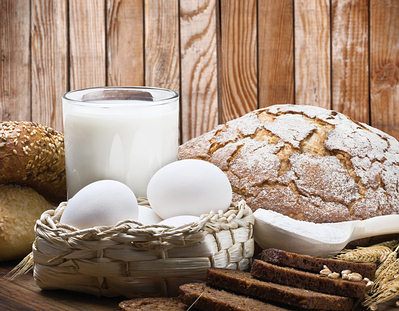
Egg yolks are an excellent source of vitamin B12, which helps in the production of red blood cells. Eggs also contain niacin, vitamin B6, and biotin. These are responsible for regulating metabolism, boosting immunity, and supporting cell growth.
Additionally, milk and milk products are a rich source of thiamine (B1), riboflavin (B2) and vitamin B12. Other B vitamins like B3, B5, B9 and B6 are also present, but in trace amounts.[14]
One glass of semi-skim milk (200 ml) provides 100 percent of vitamin B12, 15 percent of thiamine, 45 percent of riboflavin, 3 percent of niacin, 9.3 percent of folate and small amounts of pyridoxine, needed to meet the daily official requirements of each.
5. Beans
Beans are an excellent source of important B complex vitamins. The many varieties including kidney beans, black beans, red beans, black-eyed peas, cannellini beans, chickpeas, lima beans and pinto beans are all rich in thiamine, niacin, folate, and riboflavin.[15]

These vitamins help convert food into energy, reduce inflammation and boost the level of good cholesterol.
The folate and vitamin B6 content in beans helps in lowering the risk of developing cardiovascular disease.
One cup of cooked beans serves for 90 percent of the RDA of folate and 10 percent of RDA of thiamine (B1), niacin (B3), pantothenic acid (B5) and pyridoxine (B6).
6. Fortified Soy Milk
A good source of vitamin B12, soy milk is a healthy alternative for vegans and people who are allergic to lactose or who are lactose intolerant.
Since vitamin B12 is mostly found in animal products, soy milk is particularly attractive to vegans and vegetarians. Also, as it is extracted from a plant source, it contains absolutely no lactose, is free of cholesterol and is low in saturated fat.
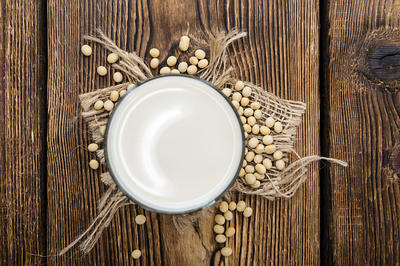
The body needs vitamin B12 for healthy nerve functioning and a healthy metabolism. Apart from B12, soy milk also contains small amounts of other B vitamins including B1, B2, B3, B5 and B9.
Just 1 cup of fortified soy milk[16] provides 50 percent of vitamin B12, 30 percent of riboflavin (B2) and 15 percent of folate (B9), needed to meet the daily official requirements of each.
Along with B vitamins, soy milk is an excellent source of high-quality protein as well as estrogen-like compounds called isoflavones which help lower ‘bad’ low-density lipoprotein (LDL) cholesterol.
Tempeh, a fermented soy product, is also a good source of B vitamins for your health. If you are vegan, you can also opt to consume nutritional yeast to help increase your vitamin B, especially vitamin B12 intake.
7. Oats
Whole grains like oatmeal, a traditional breakfast food, are another good source of vitamin B complex vitamins.
Oatmeal contains a number of B vitamins including B6, which play a vital role in nerve communication in your brain. Present also are other B vitamins including B1, B2, B3 and B9.

Just 1 cup of oatmeal provides 15 percent of the recommended daily amount of thiamine (B1), 3.2 percent of the recommended daily amount of niacin (B3) and 3.5 percent of the recommended daily amount of folate (B9).
Oatmeal also contains dietary fiber, calcium, iron, magnesium, phosphorous, potassium, zinc, and vitamins E and K. Plus, oats contain zero cholesterol.
Eating oatmeal at breakfast time each day will help lower your risk of developing heart disease, cancer, diabetes and obesity.[17]
As consuming plain oatmeal daily can get boring, many people add chopped fruits or nuts to it to improve both its flavor and nutritional content. It helps to include other whole grains like whole wheat, quinoa and millets in your daily diet.
8. Nuts and Seeds
Nuts and seeds[18] are a rich source of many important B complex vitamins, such as niacin (B3), thiamine (B1), riboflavin (B2), pantothenic acid (B5), folate (B9) and vitamin B6.

All these vitamins work as cofactors or coenzymes during metabolic processes in the body.
Eating 1.5 ounces (42 grams) of nuts every day is helpful in reducing the risk of developing various cardiovascular diseases and conditions. Chestnuts, pistachios, pecans, sunflower seeds, flaxseeds, and hemp seeds are good sources of B vitamins.
9. Spinach
Considered exceptionally beneficial for health, spinach[19] is one of the best sources of B vitamins. It contains several members of the B-vitamin family, especially B9 or folate.
You can, in fact, get up to 15 percent of the recommended daily amount of vitamin B9 in a single cup of raw spinach. This particular vitamin aids in the formation of tissues and proper functioning of cells, as well as the production of DNA.

Other B vitamins in spinach are B2, B6 and B7. It is also high in protein, calcium, iron, magnesium and potassium.
This wonderful green leafy vegetable is packed with antioxidants and compounds with anticancer properties. It also helps lower both cholesterol and blood pressure as well as improve bone health.
You can add spinach to salads, soups, omelettes or other dishes. This versatile food also goes well in mixed vegetable juice and green smoothies. It can also be cooked lightly and eaten as a side dish or added to soups and other dishes.
10. Bananas
Bananas are another good way to meet your body’s daily B vitamin requirements, especially vitamin B6.[20]
According to the National Institute of Health, an adult requires 1.5 milligrams of vitamin B6 each day and can get one-third of this by a consuming a single banana. This vitamin aids in the production of neurotransmitters that regulate sleep and mood. For women, B6 may reduce premenstrual syndrome symptoms.

Other B vitamins in bananas are B1, B2, B3, B9 and B7. In addition, bananas also contain appreciable amounts of potassium, manganese, vitamin C, fiber and copper.
Eating bananas regularly helps reduce the risk of developing various types of cancer, regulates bowl movements, improves muscle health, promotes sleep and improves cognitive ability.
In addition to bananas, you can consume papayas, oranges, cantaloupes and avocados, which are all good sources of B complex vitamins.
Expert Answers (Q&A)
Answered by Ms. Lily Chen, MS, APD, FAND (RDN)
What are the major benefits of taking vitamin B complex?
Vitamin B complex includes 8 B vitamins (thiamin, niacin, riboflavin, folate, vitamin B6, vitamin B12, biotin and pantothenic acid). If you suspect you are deficient in one of those vitamins, then check with your doctor and dietitian as taking a vitamin B supplement might be beneficial in meeting your needs. Otherwise, eating a nutritious, balanced diet is the best approach.
What happens if you consume too much vitamin B complex?
It is generally rare to have adverse effects from consuming too much of the B vitamins. Excessive intake of niacin and vitamin B6, however, can lead to flushing of skin and sensory neuropathy respectively.
What is the best time to take vitamin B complex supplements during the day?
The best time differs from individual to individual. Take vitamin B complex supplements when they agree with you the most.
What are the richest sources of vitamin B complex for vegetarians?
It is important to eat a variety of foods to ensure you have adequate intake of each B vitamin. For vegetarians, these foods include nuts, seeds, green leafy vegetables, and fortified grains and cereals. Since vitamin B12 is predominantly found in meat and dairy products, a vitamin B12 supplement might be needed.
How much vitamin B complex should one take daily?
There is no need to take a vitamin B complex daily if you are eating a nutritious, balanced diet.
Please provide some additional tips or inputs regarding the importance of vitamin B complex for a healthy life for our readers.
The B vitamins are water soluble which means they are readily excreted from the body and have to be regularly consumed in the diet. It also should be noted that high cooking temperatures can greatly affect B vitamin levels in food.
About Ms. Lily Chen MS, RDN, APD, FAND: Ms. Chen is a dietitian with a wealth of experiences in clinical care, teaching, management, and research. She has been recognized as a Fellow of the Academy of Nutrition and Dietetics which signifies she has lived up to the Academy’s values of customer focus, integrity, innovation and social responsibility. Lily was nominated by her peers to serve as Nominating Committee Chair for the professional dietetic practice group Dietitians in Business and Communications.
She currently serves as Strategic Communications Chair for the International Affiliate of the Academy of Nutrition and Dietetics and as Global Representative for Professionals in Nutrition for Exercise and Sport. She currently sees patients at Sydney Cognitive.
Resources:
- Goldsmith Grace A. Vitamins of the B Complex. Progress in Food and Nutrition Sciences. https://naldc.nal.usda.gov/download/IND43861414/PDF. Published 1975.
- Fujii A, Matsumoto H, Yamamoto H. Effect of vitamin B complex on neurotransmission and neurite outgrowth. Egyptian Journal of Medical Human Genetics. https://www.sciencedirect.com/science/article/pii/0306362395020721. Published December 8, 1999.
- Nazki FH, Sameer AS, Ganaie BA. Folate: Metabolism, genes, polymorphisms and the associated diseases. Egyptian Journal of Medical Human Genetics. https://www.sciencedirect.com/science/article/pii/S0378111913012687. Published October 1, 2013.
- Sechi GP, Serra A. Wernicke’s encephalopathy: new clinical settings and recent advances in diagnosis and management. Egyptian Journal of Medical Human Genetics. https://www.sciencedirect.com/science/article/pii/S1474442207701047. Published April 13, 2007.
- J H. Riboflavin (vitamin B-2) and health | The American Journal of Clinical Nutrition | Oxford Academic. OUP Academic. https://academic.oup.com/ajcn/article/77/6/1352/4689829. Published June 1, 2003.
- Hegyi J, Schwartz RA, Hegyi V. Pellagra: Dermatitis, dementia, and diarrhea. Freshwater Biology. https://onlinelibrary.wiley.com/doi/abs/10.1111/j.1365-4632.2004.01959.x. Published December 24, 2003.
- Tahiliani AG, Beinlich CJ. Pantothenic Acid in Health and Disease. Egyptian Journal of Medical Human Genetics. https://www.sciencedirect.com/science/article/pii/S0083672908606846. Published April 10, 2008.
- Hodges ROBERTE, Bean WB, Ohlson MA, Bleiler RE. Factors Affecting Human Antibody Response: IV. Pyridoxine Deficiency | The American Journal of Clinical Nutrition | Oxford Academic. OUP Academic. https://academic.oup.com/ajcn/article-abstract/11/3/180/4786903. Published September 1, 1962.
- M D. Adequate Intake of Biotin in Pregnancy: Why Bother? | The Journal of Nutrition | Oxford Academic. OUP Academic. https://academic.oup.com/jn/article/144/12/1885/4575066. Published October 15, 2014.
- Teodoro Bottiglieri. Folate, Vitamin B 12, and Neuropsychiatric Disorders | Nutrition Reviews | Oxford Academic. OUP Academic. https://academic.oup.com/nutritionreviews/article-abstract/54/12/382/1872941. Published December 1, 1996.
- Aslinia F, Mazza JJ, Yale SH. Megaloblastic Anemia and Other Causes of Macrocytosis. Clinical Medicine & Research. http://www.clinmedres.org/content/4/3/236.short. Published September 1, 2006.
- Sugita H, Miyajima C, Deguchi Y. The vitamin B12-producing ability of the intestinal microflora of freshwater fish. Egyptian Journal of Medical Human Genetics. https://www.sciencedirect.com/science/article/abs/pii/0044848691900286. Published October 2, 2003.
- Three of the B Vitamins: Folate, Vitamin B6, and Vitamin B12. Obesity Prevention Source. https://www.hsph.harvard.edu/nutritionsource/what-should-you-eat/vitamins/vitamin-b/. Published May 30, 2018.
- Naik S, Bhide V, Babhulkar A, et al. Daily milk intake improves vitamin B-12 status in young vegetarian Indians: an intervention trial. Nutrition Journal. https://nutritionj.biomedcentral.com/articles/10.1186/1475-2891-12-136. Published October 9, 2013.
- Rockland Louis B, Miller Charlotte Fung, Hahn Dulcie M. Thiamine, Pyridoxine, Niacin and Folacin in Quick‐Cooking Beans. Freshwater Biology. https://onlinelibrary.wiley.com/doi/abs/10.1111/j.1365-2621.1977.tb01210.x. Published August 25, 2006.
- Lebiedzińska A, Szefer P. Soybean-based functional food with vitamin B12-producing lactic acid bacteria. Egyptian Journal of Medical Human Genetics. https://www.sciencedirect.com/science/article/pii/S1756464612000941. Published June 27, 2012.
- Kapica C. Oats-Nature’s Functional Food: Nutrition Today. LWW. https://journals.lww.com/nutritiontodayonline/Abstract/2001/03000/Oats_Nature_s_Functional_Food.4.aspx.
- Ros E. Health Benefits of Nut Consumption. Nutrients. https://www.ncbi.nlm.nih.gov/pmc/articles/PMC3257681/. Published July 2010.
- Roscoe MH. The distribution of the vitamin B complex. Biochemical Journal. https://www.ncbi.nlm.nih.gov/pmc/articles/PMC1254793. Published 1930.
- Kumar KPS, Bhowmik D, Duraivel S., Umadevi M. Traditional and Medicinal Uses of Banana. Journal of Pharmacognosy and Phytochemistry. http://www.phytojournal.com/vol1Issue3/9.html.



Does Vitamin B complex have all the above B vitamins contained in 1 single gel?
foods as natural source of vitamin b
OK. Noted.
SPINACH, BEANS, DAIRY PRODUCTS LIKE BUTTER, MILK, GHEE, CURD, BUTTERMILK, ARE VERY USEFUL.
BANANA ALSO PLAYS A VITAL ROLE. FILLS STOMACH. REDUCES WEIGHT.
THESE ARE VITAMIN B SUPPLEMENT.
REGARDS,
MANISH.